
Foot Neuroma
What’s Morton’s Neuroma?
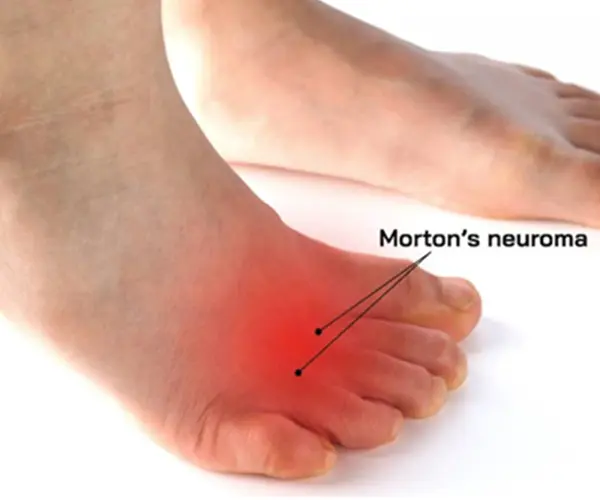
Morton’s neuroma is a painful foot condition involving a benign growth of tissue around the nerves that run between the metatarsal bones in the ball of the foot. This leads to symptoms like sharp, burning pain, tingling, or numbness in the toes, often aggravated by pressure or wearing tight footwear. Treatment options range from conservative measures like orthotics and footwear changes to more invasive interventions, including injections or surgical removal of the neuroma when necessary.
Common Causes for a Morton’s Neuroma
Morton’s neuroma is a painful condition that typically affects the ball of the foot, often between the third and fourth toes. Commonly caused by compression or irritation of the plantar digital nerves, several factors contribute to its development. One primary cause is wearing tight or ill-fitting footwear, particularly high heels or narrow-toed shoes, which can squeeze and stress the nerves. Repetitive overuse and high-impact activities, like running, can also lead to this condition. Additionally, foot deformities, such as bunions or hammertoes, can increase the risk of Morton’s neuroma. Understanding these common causes is crucial for prevention and early intervention to alleviate the discomfort and prevent further progression of the condition.
Diagnosing Morton’s Neuroma
Diagnosing Morton’s Neuroma involves a comprehensive evaluation to confirm the presence of this painful condition. Healthcare professionals typically follow these steps:
These diagnostic methods, when combined, help healthcare providers accurately identify Morton’s Neuroma and develop an appropriate treatment plan.
Conservative Treatments for Morton’s Neuroma
Conservative treatments for Morton’s neuroma are often the first line of defense against this painful condition, focusing on alleviating symptoms and preventing the need for surgical intervention. These approaches include:
Immobilization
Resting the foot by avoiding high-impact activities and providing periods of non-weight-bearing can reduce irritation and allow the affected nerve to heal. Immobilization can be achieved through the use of a walking boot or a brace, which limits motion in the affected area.
Physical Therapy
Physical therapy aims to improve foot and ankle strength and flexibility, enhance gait mechanics, and alleviate pressure on the neuroma. Therapists employ exercises to strengthen surrounding muscles, correct foot posture, and optimize biomechanics, thereby reducing stress on the nerve.
Steroid Injections
Corticosteroid injections can help alleviate pain and inflammation associated with Morton’s neuroma. They are administered directly into the affected area, providing temporary relief, though their long-term effectiveness can be limited, and repeated use should be closely monitored.
Custom Orthotics
Custom orthotic devices are designed to provide arch support and cushioning to redistribute pressure across the foot, reducing compression on the neuroma. These inserts can improve foot mechanics and reduce the risk of symptom recurrence.
Custom Orthotics
Custom orthotic devices are designed to provide arch support and cushioning to redistribute pressure across the foot, reducing compression on the neuroma. These inserts can improve foot mechanics and reduce the risk of symptom recurrence.
Wearing Appropriate Footwear
Proper footwear is essential in managing Morton’s neuroma. Shoes with a wide toe box and adequate arch support can relieve pressure on the forefoot and reduce irritation. Avoiding high heels and tight-fitting shoes is particularly important to prevent exacerbation of symptoms.
These conservative treatments are often effective in managing Morton’s neuroma, but the choice of approach should be tailored to the individual’s specific condition and guided by a healthcare professional’s recommendation. If conservative methods fail to provide sufficient relief, more invasive options, including surgical removal of the neuroma, may be considered.